
Atlantic County at a Glance: Growth Across 23 Municipalities
Atlantic County entered 2026 with a broad and increasingly diversified development pipeline spanning housing, healthcare, aviation and aerospace, tourism, logistics, education, infrastructure, renewable energy, and commercial redevelopment. The Atlantic County Economic Development & Construction Project Inventory documents projects across all 23 municipalities, ranging from major multi-billion-dollar redevelopment concepts to neighborhood-scale housing, retail, infrastructure, and small-business investments. Collectively, the report shows that development is concentrated most heavily in Atlantic City and the county’s designated mainland growth communities—Egg Harbor, Galloway, and Hamilton townships—while the shore communities emphasize tourism, housing, waterfront reinvestment, and quality-of-life improvements.
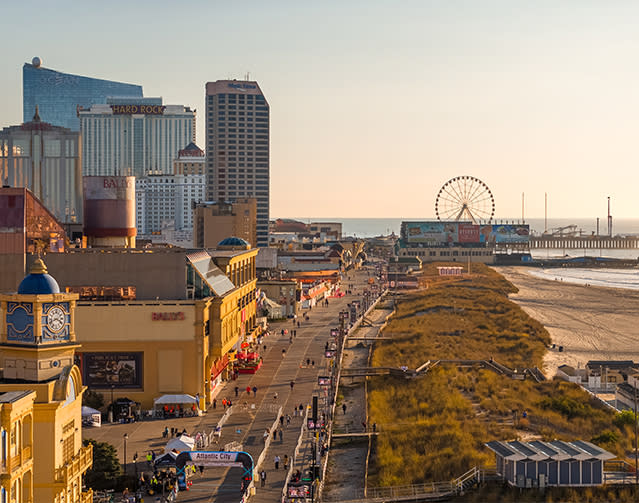
Atlantic City remains the county’s largest and most complex development market. The proposed approximately $2.7 billion Renaissance at Bader Field represents the county’s largest redevelopment concept, envisioning a long-term mixed-use transformation of 143 acres. At the same time, the city is experiencing a notable residential resurgence, with hundreds of market-rate apartments and townhouses approved or proposed in the South Inlet and other neighborhoods. Hard Rock is investing $50 million in its North Tower, while Showboat continues expanding its family-entertainment model. Perhaps the most strategically significant diversification initiative is the $50 million AtlantiCare–Temple University medical school partnership, which would establish Atlantic City’s first medical school campus and further strengthen healthcare and education as non-gaming economic anchors.
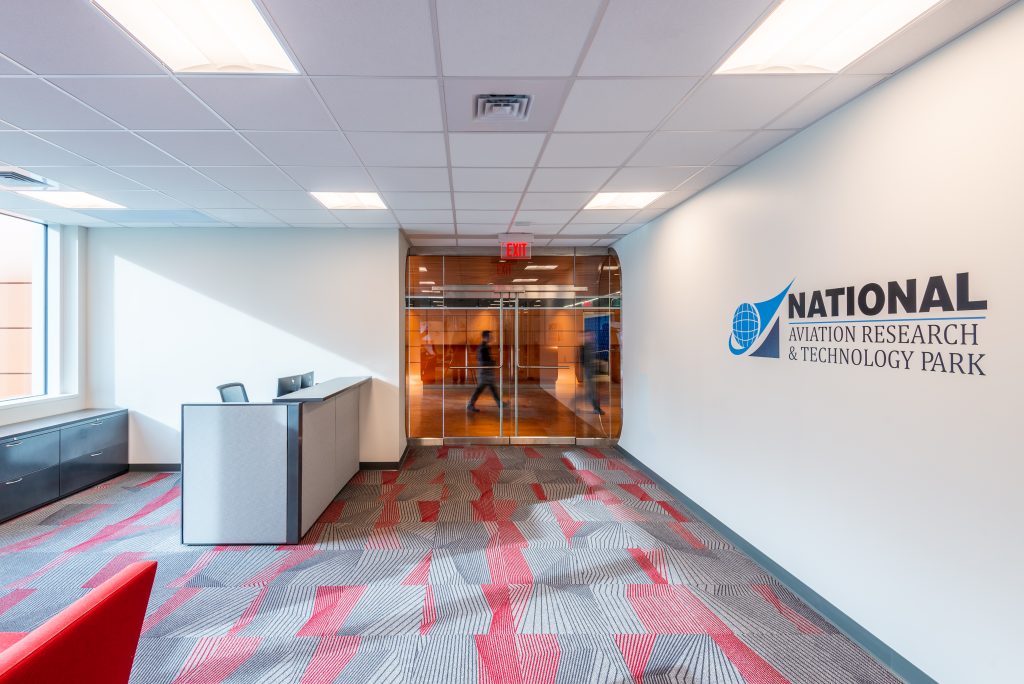
The county’s mainland growth corridor is generating some of the strongest employment, housing, and institutional investment. In Egg Harbor Township, the $18.5 million, 40,000-square-foot second building at the National Aerospace Research and Technology Park opened in January 2026, expanding the aviation and aerospace innovation cluster surrounding Atlantic City International Airport and the FAA William J. Hughes Technical Center. D.R. Horton’s 657-unit Ocean Club development represents one of the county’s largest active residential projects, while the ACUA renewable natural gas facility adds a significant clean-energy infrastructure asset.
Hamilton Township is positioned for one of the county’s largest employment-generating private developments through the proposed Amazon/SunCap fulfillment center at the former Atlantic City Racecourse, approximately 652,000 square feet and projected to support roughly 750 jobs. The township also has substantial residential growth underway or proposed, including the redevelopment of the Mays Landing Country Club and several major subdivisions.
Galloway Township has one of the county’s most balanced development portfolios, combining healthcare, education, housing, retail, and tourism. Major projects include Stockton University’s $19.5 million Bjork Library Learning Commons, the 198-unit Cornerstone affordable housing development, a new approximately 86,000-square-foot ShopRite, AtlantiCare’s new rehabilitation hospital, and continued investment in the Seaview resort and Renault tourism assets.
The back-bay and shore communities are pursuing smaller but strategically important projects centered on waterfront development, housing, tourism, and commercial revitalization. Somers Point continues to build momentum around its Bayfront District through the Paddle Club mixed-use waterfront project and major residential development at Greate Bay. Ventnor completed the first $7.1 million phase of its boardwalk reconstruction, part of a broader approximately $26 million program, while the Ventnor Plaza redevelopment represents a substantial reuse of an underperforming commercial property. Northfield adopted redevelopment plans for the Dolphin Avenue and Wabash Avenue corridors, creating a framework for future private investment. Pleasantville’s $65.8 million Decatur Avenue Elementary School replacement represents the county’s largest major K–12 capital project during the period.
Development on the western and rural edges of Atlantic County is more constrained by Pinelands regulations, environmental conditions, infrastructure, and lower market density, but targeted opportunities remain. The proposed DEM Global steel fabrication facility spanning Buena Vista and Folsom could create an important industrial reuse opportunity utilizing an existing brownfield and rail infrastructure. Egg Harbor City is advancing redevelopment planning for former industrial and landfill properties, while Hammonton continues to function as the western county’s strongest mixed-use, residential, cultural, and commercial center.
Overall, the report depicts an Atlantic County economy gradually broadening beyond its historic dependence on casino gaming and seasonal tourism. The strongest emerging themes are healthcare and medical education, aviation and aerospace, housing development, logistics, renewable energy, destination tourism, and redevelopment of obsolete or underutilized properties. The central economic-development challenge is now to convert the unusually large number of approved and proposed projects into construction, permanent employment, new ratables, and sustained private investment while aligning infrastructure, workforce development, housing, and land-use policies with the county’s evolving economic base.